The lights flicker, the fridge hums silent, and the clock on the microwave goes dark. A power outage. For many, it's an inconvenience; for some, it's a genuine safety concern. Whether you're safeguarding your home during an unexpected blackout, powering your off-grid cabin, or simply want reliable electricity for your RV adventures, diving into generator buying guides and comparisons is your first crucial step. Choosing the right generator isn't just about picking the biggest or cheapest model; it's about understanding your needs, prioritizing safety, and making an informed investment that truly delivers peace of mind.
This comprehensive guide will cut through the noise, helping you understand the different types of generators, how to calculate your power needs, and what critical features to look for. You'll learn about essential safety protocols and the crucial role of transfer switches, ensuring you can operate your chosen unit effectively and without risk.
At a Glance: Your Generator Power-Up Checklist
- Assess Your Needs First: Decide if you need backup for a few essentials, your whole house, or portable power for recreation.
- Know Your Types: Home standby offers automatic, permanent power; portables are versatile and cheaper; inverters are quiet and efficient; solar generators are emission-free for smaller needs.
- Calculate Your Wattage: List all essential appliances and their running watts to determine the right size. Don't forget starting watts!
- Prioritize Safety: Always run gas/diesel generators outdoors, far from your home, and ensure CO detectors are active.
- Consider a Transfer Switch: This essential device safely connects a portable generator to your home's electrical panel, preventing dangerous "backfeeding."
- Factor in Fuel: Gasoline, propane, natural gas, diesel, or solar – each has pros and cons for availability, storage, and cost.
- Look for Key Features: Automatic CO shutoff, electric start, low-oil shutoff, and noise levels are important considerations.
Unpacking the Power Puzzle: Why a Generator?
Life without power can range from a minor annoyance to a major disruption. For homeowners, a generator means keeping your refrigerator cold, your sump pump running (critical during storms!), and your essential medical equipment operational. For adventurers, it means powering tools at a remote job site, enjoying creature comforts in an RV, or keeping devices charged while camping. Understanding this fundamental "why" is the first step in your generator buying journey, as it will heavily influence the "what."
Demystifying Generator Types: Finding Your Perfect Match
Generators aren't one-size-fits-all. Each type is designed with specific applications, power outputs, and fuel sources in mind. Let's break down the main contenders.
Home Standby Generators: The "Set It and Forget It" Solution
Imagine the power goes out, and within seconds, your lights come back on without you lifting a finger. That's the magic of a home standby generator. These heavy-duty units are permanently installed outside your home by a professional, hardwired directly into your electrical system.
- How They Work: Connected via an automatic transfer switch (ATS), they constantly monitor your utility power. When an outage occurs, the ATS automatically senses it, starts the generator, and transfers your home's power supply. When utility power returns, the ATS switches back, and the generator shuts down. Seamless.
- Fuel & Power: Standby generators typically run on natural gas or propane. If connected to your home's natural gas line, you have an virtually unlimited fuel source, eliminating the need for manual refueling. They offer significant power output, usually from 5,000 to 20,000 watts, capable of powering most or even all of a typical home.
- Cost & Installation: These are the most significant investment. The unit itself can range from $2,000 to $7,000, but installation costs, including electrical work, gas line connection, and permits, can easily add thousands more, often exceeding the unit's price.
- Key Benefits: Ultimate convenience, automatic operation, high power output, unlimited fuel with natural gas, quiet operation relative to their power, and features like self-diagnosis.
- Considerations: High upfront cost, professional installation required, permanent fixture.
Portable Generators: Versatility on Wheels
When you need power that can go where you go, or simply a less expensive backup option for critical circuits, a portable generator is your go-to. These movable units are popular for temporary power needs, job sites, camping, RVing, or powering essential appliances during a blackout.
- Fuel & Power: Most portable generators run on gasoline, though many are now dual-fuel, offering the flexibility to switch between gasoline and propane. Their power output typically ranges from 3,000 to 8,500 watts.
- Operation: They require manual starting, often with a pull cord, though many models offer an electric start option (for a small additional cost, usually around $50, which includes a battery). You typically connect devices via extension cords, or, for safer and more comprehensive home backup, connect it to a manual transfer switch.
- Cost: Much more budget-friendly than standby units, ranging from $400 to $3,000.
- Key Benefits: Affordability, portability, versatility for various uses, immediate power with manual setup.
- Considerations: Require manual operation, fuel storage and refueling, can be noisy, outdoor-only use (critical for safety).
Inverter Generators: Quiet Power, Smart Fuel
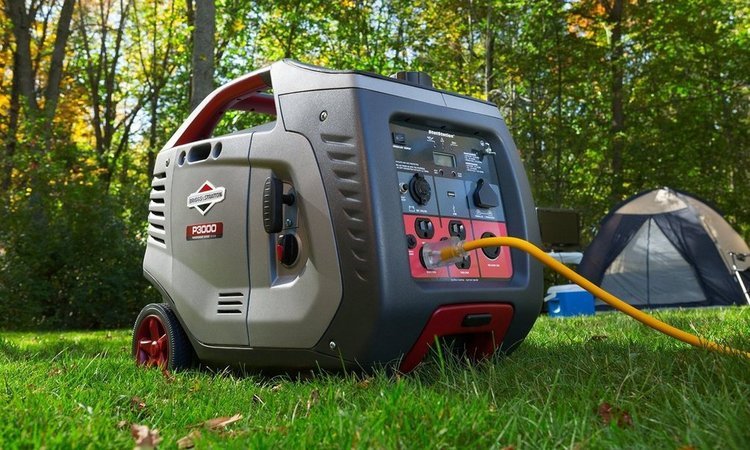
A specialized type of portable generator, inverter generators are all about efficiency and quiet operation. If you've ever been annoyed by a loud, sputtering generator at a campsite, an inverter model is likely what you wish you had.
- How They Work: Unlike traditional generators that run at a constant engine speed, inverters adapt their engine speed to match the power demand. This "throttling up and down" is key to their advantages.
- Efficiency & Noise: This adaptive engine speed translates directly to superior fuel efficiency and significantly quieter operation, often running between 50-60 decibels (comparable to a normal conversation). They also produce "cleaner" power, which is safer for sensitive electronics.
- Power & Size: Power output for inverter generators ranges from 900 to 7,600 watts. They come in various sizes, from small, lightweight units (around 30 lbs for camping) to larger models (250+ lbs) capable of backing up more substantial home needs.
- Cost: Generally more expensive than traditional portable generators of comparable wattage, typically $400 to $5,000.
- Key Benefits: Quiet operation, excellent fuel efficiency, clean power for electronics, lower emissions, often more compact and portable.
- Considerations: Higher cost than conventional portables, still requires fuel and outdoor operation.
Solar Generators (Portable Power Stations): Silent, Emission-Free Power
Think of solar generators not as traditional generators with engines, but as large, rechargeable batteries on wheels or in a convenient package. They don't burn fuel; they store electricity.
- How They Work: These units charge via standard electrical outlets or, as their name suggests, connect to solar panels to harness the sun's energy. Once charged, they provide AC power through standard outlets and often DC power via USB ports.
- Operation: Silent, produce zero emissions or carbon monoxide, meaning they can be safely used indoors (though always follow manufacturer guidelines). They are ideal for short-term power for a few devices, critical medical equipment, or as a solution for apartments where gas generators are unsafe or prohibited.
- Power & Runtime: While offering substantial wattage (typically 1,800 to 6,000 watts), their runtime is limited by battery capacity and the load placed on them. They generally offer less power and shorter runtimes than comparable gas-powered portables.
- Cost: Often heavier and more expensive than small inverter generators, ranging from $1,500 to $4,000.
- Key Benefits: Silent operation, no emissions (safe for indoor use), free "fuel" via solar panels, no fossil fuels.
- Considerations: Limited runtime, less power than gas generators for heavy loads, higher upfront cost, solar charging efficiency depends on sunlight.
Sizing Up Your Needs: The Wattage Worksheet
Choosing the right generator size is paramount. Too small, and you won't power what you need; too large, and you've overspent and might be wasting fuel. The key is to calculate your total wattage requirements.
Step-by-Step Power Calculation:
- List Essential Appliances: Go through your home and list every device you absolutely must have running during an outage. Don't forget items like a well pump, water heater, or critical medical devices.
- Find Running Wattage: For each item, locate its running wattage (the power it continuously consumes). This is often found on a label on the appliance itself, in its owner's manual, or with a quick online search.
- Identify Starting Wattage (for motors): Appliances with electric motors (refrigerators, freezers, sump pumps, HVAC systems) require a surge of power, called starting wattage or peak wattage, for a few seconds when they first kick on. This can be 2-3 times their running wattage. Your generator must be able to handle the highest starting wattage of any single motor you plan to run, plus the running wattage of all other simultaneously operating devices.
- Sum It Up: Add up the running wattages of all the items you want to run simultaneously. Then, identify the single item with the highest starting wattage. Add that starting wattage to the total running wattage of everything else. This gives you your minimum required generator size.
Example:
If you want to run:
- Refrigerator (600 running watts / 1800 starting watts)
- Sump pump (1000 running watts / 2000 starting watts)
- Lights (200 running watts)
- TV (300 running watts)
Let's say the sump pump is the highest starting load.
Total Running Watts (excluding the starting component of the largest motor): 600 (fridge) + 200 (lights) + 300 (TV) = 1100 running watts.
Add the highest single starting wattage (Sump pump): 1100 + 2000 (Sump pump starting watts) = 3100 watts.
You'd need a generator capable of at least 3100 watts to handle this load, plus a little buffer for safety.
Common Device Wattage Estimates:
| Appliance | Running Wattage | Starting Wattage (Estimate) |
|---|---|---|
| Refrigerator | 500-1,000 watts | 1,500-3,000 watts |
| Sump Pump | 750-1,500 watts | 1,500-3,000 watts |
| Portable Heater | 750-1,500 watts | N/A |
| Window Air Conditioner | 400-1,200 watts | 1,200-3,600 watts |
| Water Heater | 4,000-5,000 watts | N/A |
| Dryer (Electric) | 2,000-6,000 watts | N/A |
| Washing Machine | 500-1,200 watts | 1,500-3,600 watts |
| Microwave | 700-1,500 watts | N/A |
| Coffee Maker | 600-1,200 watts | N/A |
| Television (42-inch) | 200-300 watts | N/A |
| Desktop Computer | 125-200 watts | N/A |
| Laptop | 20-75 watts | N/A |
| Lights (per bulb) | 5-80 watts | N/A |
| A typical home looking for essential backup power might require around 5,000 watts. For those needing a robust portable option, you might consider a unit like a Honda 5000 generator, which offers a strong balance of power and reliability for many common household needs. |
Connecting Your Generator Safely: Transfer Switches & Interlocks
Simply running extension cords from your generator to your appliances isn't always practical or safe, especially if you want to power hardwired items like lights, a well pump, or your furnace. This is where transfer switches come in.
The Critical Role of a Transfer Switch
A transfer switch is a device that safely connects your generator to your home's electrical panel. It acts as a gatekeeper, allowing you to switch your home's power source from the utility grid to your generator, and vice-versa, without any dangerous overlap.
- Automatic Transfer Switches (ATS): These are standard for home standby generators. They sense when grid power is lost, automatically start the generator, and switch your home's electrical load to the generator. When grid power returns, they automatically switch back and shut down the generator.
- Manual Transfer Switches (MTS): Used with portable generators, these require you to manually flip switches to transfer power. When the power goes out, you start your portable generator, then go to your transfer switch panel and manually select which circuits you want to power with the generator.
Why You Need a Transfer Switch (or Interlock Kit):
- Prevents Backfeeding: This is the most crucial reason. Without a transfer switch, if you plug your generator directly into your home's main electrical panel (a practice known as "backfeeding"), you risk sending electricity back onto the utility grid. This can electrocute utility workers who are trying to restore power. It's not just dangerous; it's illegal.
- Powers Hardwired Appliances: A transfer switch allows your generator to power hardwired appliances like your furnace, well pump, overhead lights, and water heater. You're not limited to just what you can plug into an extension cord.
- Reduces Fire Risk: By sending power through your home's existing wiring, you eliminate the need for multiple extension cords, which can overheat, trip, and pose fire hazards.
- Convenience: Once installed, it's a much cleaner and more organized way to manage your home's emergency power.
Installation & Considerations:
- Professional Installation: Transfer switches should always be installed by a licensed electrician. This is not a DIY project due to the inherent dangers of working with your home's electrical system. Expect installation costs to range from $500 to $900.
- Generator Compatibility: Most transfer switches require a 220-volt generator (typically 5,000 watts or more) to provide power to multiple circuits.
The Interlock Kit: A Cost-Effective Alternative
An interlock kit is a less expensive alternative to a full manual transfer switch, typically costing $100-$200 less for the parts. It's a mechanical device installed on your main circuit breaker panel that prevents the main utility breaker and the generator input breaker from being on at the same time.
- How it Works: When installing an interlock kit, your electrician will also install a special inlet box outside your home. You connect your portable generator to this inlet box. The interlock kit ensures that when you turn on the generator's breaker, the main utility breaker is physically locked in the "off" position, preventing backfeeding.
- Benefits: More affordable than a transfer switch, still prevents backfeeding, and allows you to power your entire circuit breaker panel (though you still need to manage the load by manually turning off non-essential breakers to avoid overloading your generator).
- Installation: Also requires professional installation by a licensed electrician.
Fueling Your Power: Exploring Your Options
The type of fuel your generator uses significantly impacts its operation, convenience, and long-term costs.
- Gasoline:
- Pros: Most common and readily available for portable generators. High energy density.
- Cons: Has a limited shelf life (3-6 months) and degrades over time, potentially gumming up the carburetor. Requires periodic refueling and proper storage (with fuel stabilizer) to prevent fire hazards and system clogs. Volatile.
- Propane:
- Pros: Clean-burning fuel, longer shelf life than gasoline, easily stored in tanks (no degradation), often a dual-fuel option for portables. Less volatile than gasoline. Used in many standby units.
- Cons: Less energy-efficient than gasoline (you'll use more propane for the same power output). Requires external tanks or a dedicated line.
- Natural Gas:
- Pros: Exclusively for standby generators. Connected directly to your home's natural gas line, providing an unlimited fuel source during an outage (unless the main gas supply is affected). Very clean-burning.
- Cons: Not available for portable units. Less energy-efficient than other fuels. Tied to a utility line, which itself could be disrupted.
- Diesel:
- Pros: Common for larger, industrial-style portable generators. Can be stored longer than gasoline. Lower flammability risk compared to gasoline. Fuel-efficient.
- Cons: Diesel engines are typically heavier and produce more emissions than gasoline. Diesel fuel can "gel" in extremely cold temperatures without additives.
- Solar:
- Pros: Used by solar generators. Free, clean, and renewable energy source. Zero emissions, quiet operation.
- Cons: Charging speed depends on sunlight and panel size. Limited by battery capacity. Requires battery backup for night or cloudy days. Higher upfront cost for comparable power.
Essential Features: What to Look For
Beyond the basic type and power output, a generator's features can greatly enhance its usability, safety, and longevity.
- Automatic CO Shutoff: A non-negotiable safety feature, especially for portable and inverter generators. This system automatically shuts down the engine if dangerous levels of carbon monoxide are detected near the unit. Look for models certified with ANSI/UL2201 or ANSI/PGMA G300.
- Electric Start: Say goodbye to wrestling with a pull cord. An electric start (often push-button) makes starting your generator much easier, though it typically requires a small 12V battery, which may need maintenance.
- Low-Oil Shutoff: Protects your engine by automatically switching off the generator if the oil level drops below a safe operating limit, preventing potentially catastrophic damage.
- Fuel Gauge: For gasoline or diesel generators, a clear fuel gauge allows you to monitor levels and plan for refueling, avoiding unexpected shutdowns.
- Noise Level: Measured in decibels (dB). Quieter models (like inverter generators) run 50-60 dB, which is like normal conversation. Louder traditional portables can hit 70-80 dB or even 90-100 dB, which can be irritating to neighbors and yourself.
- Automatic Start: Primarily for standby generators, this feature enables the generator to detect an outage and start itself, seamlessly transferring power to your home.
- Alternative Fuel Capacity (Dual/Tri-Fuel): Offers flexibility to run on more than one fuel type (e.g., gasoline and propane), which can be crucial during fuel shortages or for extended runtimes.
- Multiple Outlets: More outlets allow you to connect more devices directly and potentially balance the load across different circuits more effectively.
- Removable Console: Some portable units offer a detachable control panel, allowing you to plug in appliances without needing to be right next to the noisy generator itself.
- Low-CO Engine: Engines designed to produce fewer carbon monoxide emissions are a welcome environmental and safety improvement.
AC vs. DC Generators: A Quick Clarification
You might see these terms when researching power.
- AC (Alternating Current): This is the standard power type for virtually all household appliances, electronics, and the utility grid. Most generators (portable, standby, inverter) produce AC power.
- DC (Direct Current): Primarily used for charging batteries (like in cars or solar power banks) or powering small electronic devices that convert AC to DC with an adapter. While some generators might have a small DC outlet for battery charging, their primary purpose for home power is to produce AC. Solar generators, being essentially large batteries, inherently store and often provide DC power, which is then converted to AC via an internal inverter for household use.
For most homeowners, focusing on AC power output is what truly matters for your home's needs.
Prioritizing Safety: Non-Negotiables for Generator Operation
Operating a generator, especially one that burns fossil fuels, comes with serious safety responsibilities. Ignoring these can have deadly consequences.
- Carbon Monoxide (CO) Poisoning is a Silent Killer: Gasoline or diesel generators must never be operated in an enclosed area. This includes garages (even with the door open), basements, sheds, screened-in porches, or near open windows and doors. Carbon monoxide is an odorless, colorless gas that can accumulate rapidly and is lethal.
- Placement: Position your generator at least 20 feet away from your home, with the exhaust directed away from windows, doors, and any air intake vents.
- CO Detectors: Ensure you have working carbon monoxide detectors installed inside your home, especially near sleeping areas. Test them regularly. Many newer portable generators include an automatic CO shutoff feature – look for it!
- Fire Hazards:
- Clearance: Keep the generator at least five feet away from any surrounding surfaces or combustible materials to prevent overheating and fire.
- Refueling: Never refuel a hot generator. Allow it to cool down completely. Spilled fuel on a hot engine can ignite.
- Fuel Storage: Store gasoline in approved, labeled containers, away from ignition sources, and in a well-ventilated area outside your home. Use a fuel stabilizer for gasoline that will be stored for extended periods to prevent it from degrading and becoming a fire hazard or clogging the fuel system.
- Electrical Safety:
- Transfer Switches/Interlock Kits: As discussed, these are crucial to prevent dangerous backfeeding into the utility grid.
- Heavy-Duty Cords: If using extension cords (for direct plug-in portable generator use), ensure they are rated for outdoor use, are heavy-duty enough for the power load, and are free of damage. Avoid overloading cords.
- Dry Conditions: Never operate a generator in wet conditions. Protect it from rain or snow with an open-sided tent or canopy designed for generators, ensuring ample ventilation.
Before an emergency strikes, always read your owner's manual thoroughly. Familiarize yourself with your specific generator's starting procedure, maintenance schedule, and safety warnings.
Reputable Brands You Can Trust
The generator market is robust, with several well-known brands offering a range of options from portable to home standby units. Brands like Briggs & Stratton, Cat, Champion, DeWalt, Generac, Honda, and Ryobi are consistent players, known for their reliability and customer support. Researching specific models within these brands, checking customer reviews, and comparing warranty options is always a smart move.
Your Power, Your Choice: Taking the Next Step
Navigating generator buying guides and comparisons can feel overwhelming, but by systematically evaluating your needs, understanding the different types, and prioritizing safety, you're well on your way to making an informed decision.
Take the time to accurately calculate your wattage needs, consider the pros and cons of each fuel type, and envision how you'll connect and operate the generator safely. Whether you opt for the seamless integration of a home standby system, the versatile utility of an inverter, or the silent, emission-free power of a solar generator, having a reliable backup plan means one less worry when the unexpected happens. Invest in power, invest in peace of mind.